
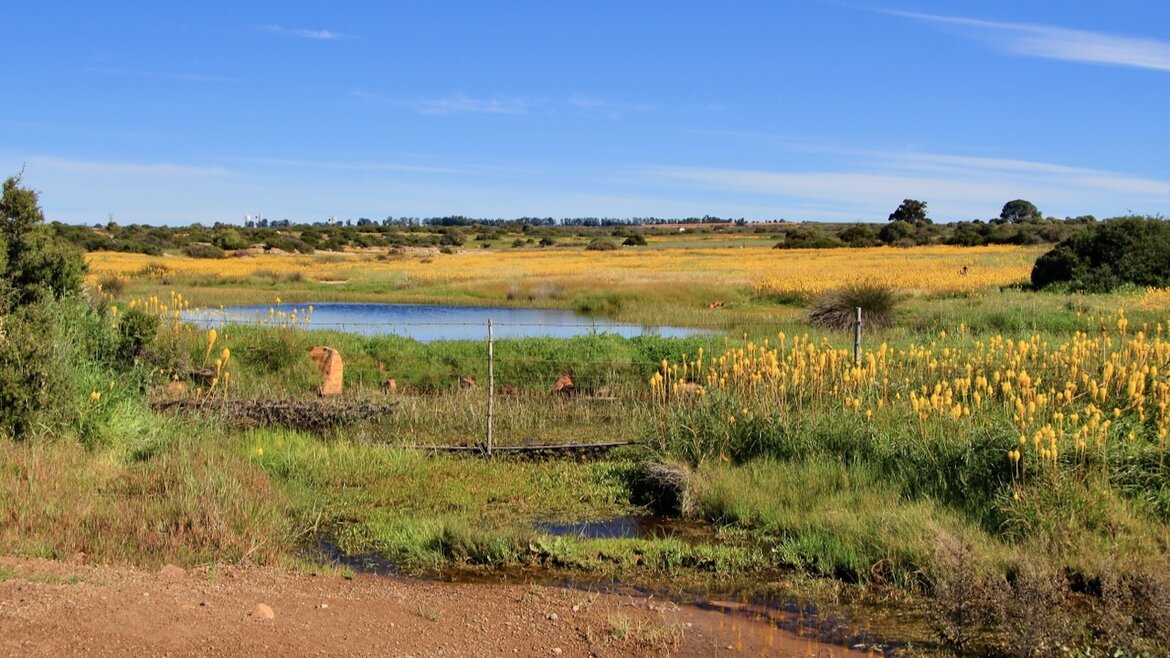
In my dream, Nieuwoudtville had already arranged itself beautifully. There would be a pale Karoo road, a little dust rising behind the car, and somewhere beyond the scrub, whole fields of yellow daisies waiting for me to tiptoe through them with the sort of casual grace I absolutely do not possess. I had seen the photographs. You know the ones: women drifting through wildflowers as if they were born backlit. Naturally, I decided I could be this person too. I even bought the hat.
Not just any hat, of course. An insta-worthy hat. A hat with expectations. A hat that had clearly been led to believe it was about to have its main-character moment in the greatest flower show on earth.
That was the dream: Me, Insta-Hat and the daisies. But Mother Nature had other plans.
Before I tell you more, where exactly is this place?
Where is Nieuwoudtville?
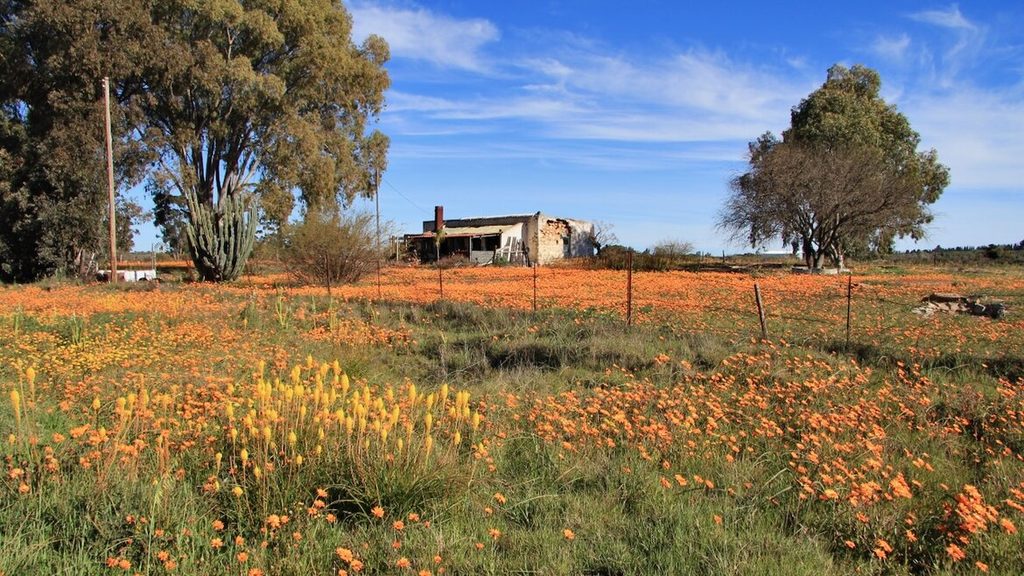
Nieuwoudtville sits on the Bokkeveld Plateau, about 300 kilometres north of Cape Town in South Africa’s Northern Cape. It is a small sandstone village with a quiet, end-of-the-road charm.
It is also known as the world’s bulb capital, which sounds rather grand for such an unassuming place. But beneath those dry-looking fields, tiny bulbs lie hidden underground like beautiful little secrets, waiting for the winter rains to coax them into the light. Come spring, usually between August and September, the veld reveals what it has been keeping from you all along.
Nieuwoudtville is a biodiversity hotspot, home to an extraordinary concentration of indigenous bulbs, or geophytes if you are feeling botanically well-behaved. The last count recorded 309 geophytes.
Proof, perhaps, that if I had paid more attention, this place was never only going to be about the daisies.
The Reality Check – The Daisies Couldn’t Wait
As we drive closer to Nieuwoudtville, small stands of white and yellow flowers begin to appear along the roadside. Not carpets exactly, but enough to make my heart lift. Then we pass a field tinged with the most delicate mauve, and I decide that we have arrived in the nick of time.
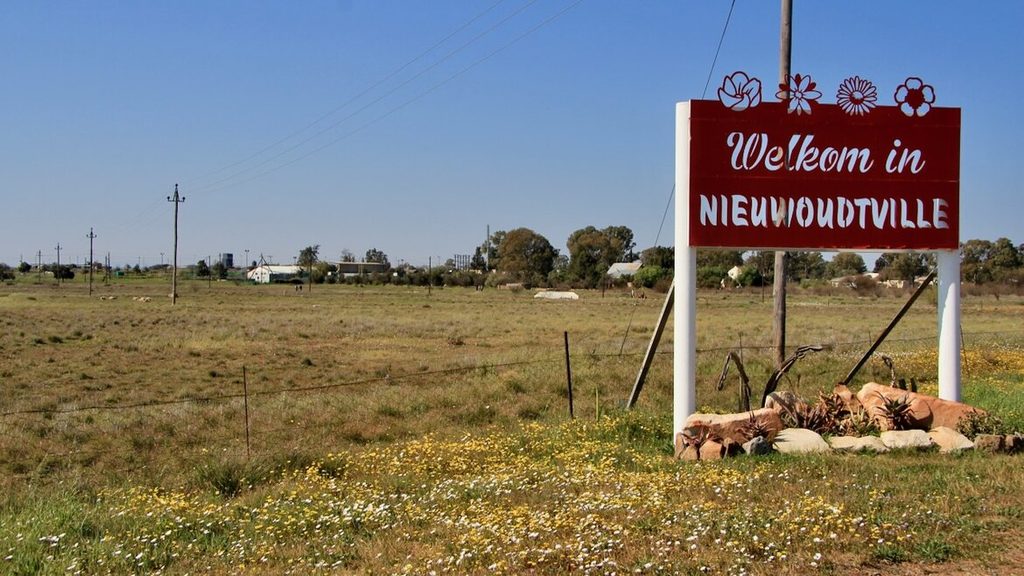
Nieuwoudtville itself welcomes us with a beautiful carved sign, its feet scattered with a few brave daisies being whipped back and forth by the wind. Naturally, this seemed like the perfect place for our first selfie: me, Insta-Hat, and the famous flower town I have come so far to see.
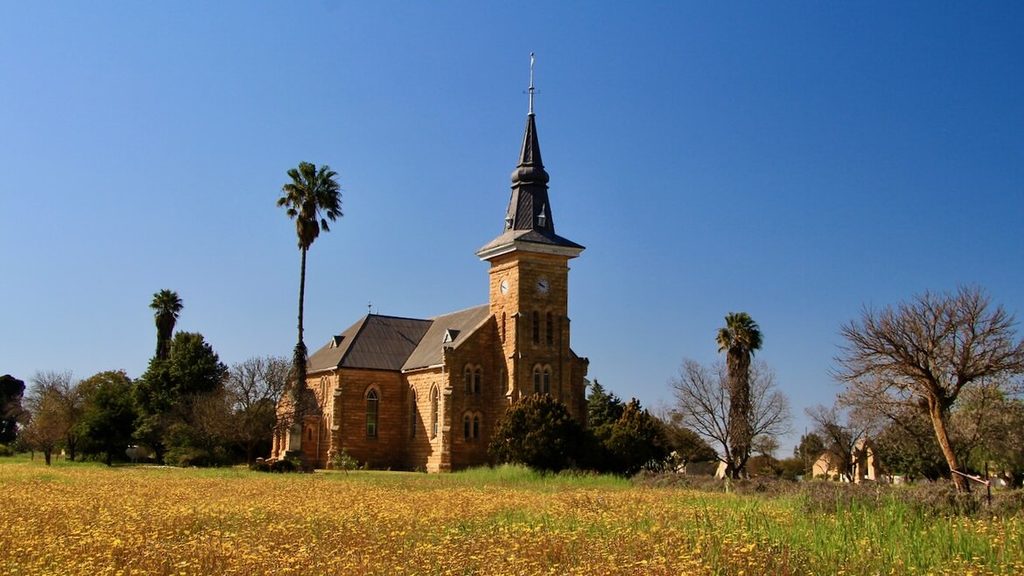
But the wind has other ideas. It grabs at the brim, tugs at my clothes, and threatens to send both Insta-Hat and me skittering across the Northern Cape like badly packed laundry. Abandoning my selfie ideas, we head to the NG Church grounds, where a tourist information centre is open during the flower season.
It’s Sunday, and the village has that strange hollow feeling that quiet small towns sometimes have when the wind is the only thing still making an effort. An uneasy feeling settles over me.
We arrive at the information centre expecting maps, advice, perhaps a cheerful person to point us towards fields of botanical glory. Instead, there is no one. It is closed.
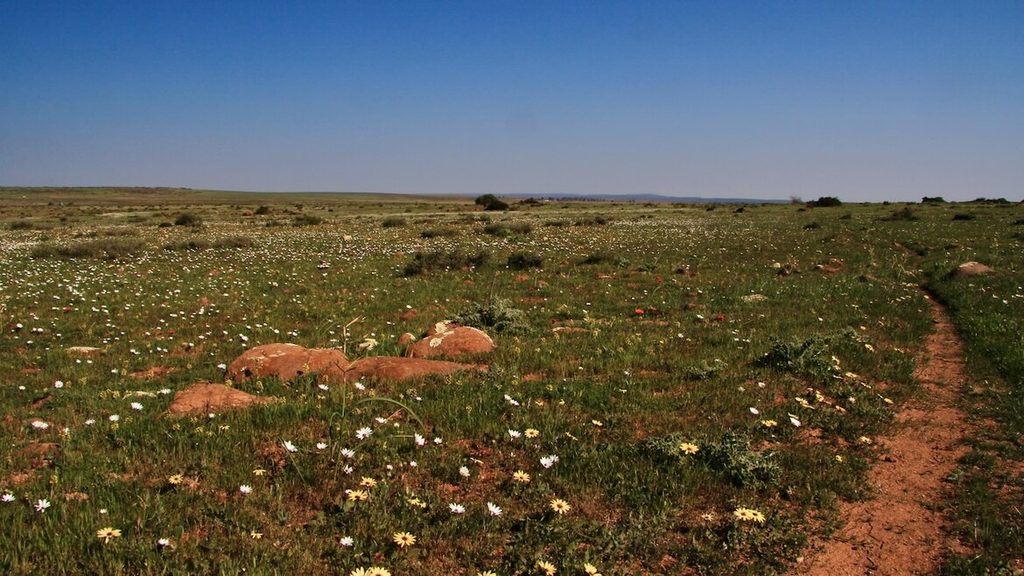
Next to the church, we’re greeted by a field of exhausted daisies, their heads bowed in a gentle farewell. Not blooming and not beaming. Not waiting patiently for me to arrive. Just finished. Spent.
I’m more than a little disappointed. My marvellous dream of standing backlit in the midst of Mother Nature’s floral celebration doesn’t look like it will happen.
Learning to Look Below the Grand Gesture at the Hantam Botanical Garden
The next morning, hoping that someone might point us towards the magnificent fields of flowers, we head off to the Hantam Botanical Garden just outside Nieuwoudtville.
As we drive through the grounds towards the visitor centre, my heart sinks even lower than yesterday. There are no spectacular swathes of yellow. No orange carpets rolling away towards the horizon.
Dejected, I slouch into the visitor centre. Exquisite images of fields filled with mauve, yellow and orange flowers on the walls do nothing to lighten my mood. Johan, a South African National Biodiversity Institute (SANBI) staff member, recognises my downcast demeanour.
He gently explains what happened. The rains came early this year, and the daisies, inconsiderately, followed them. Then came unusually high winter temperatures and winds, so by the time I arrived for my grand floral moment, the stars of the show were already packing up their petals and heading off for a well-earned rest.
Johan directs me to their boardroom, where his team has set up a display of at least 40 different bulb specimens currently in flower. And this, it turns out, is where the real lesson begins.
The Flowers I Nearly Missed
Most of the flower specimens on display are tiny. Delicate. Easy to miss. The sort of flowers you would never notice from the comfort of a car, especially if you were busy scanning the horizon for the kind of spectacle that looks good in photographs.
If we wanted to see these little gems in the wild, Johan explained, we would have to get out and walk slowly through the veld.
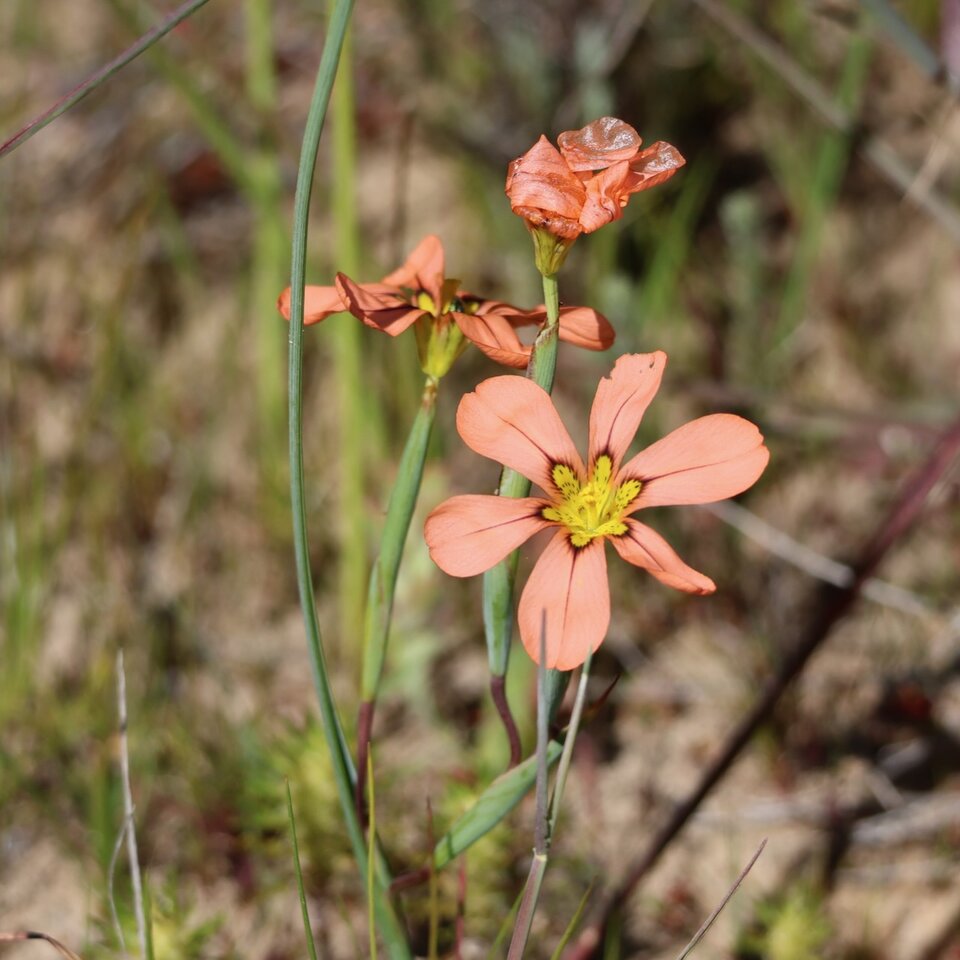
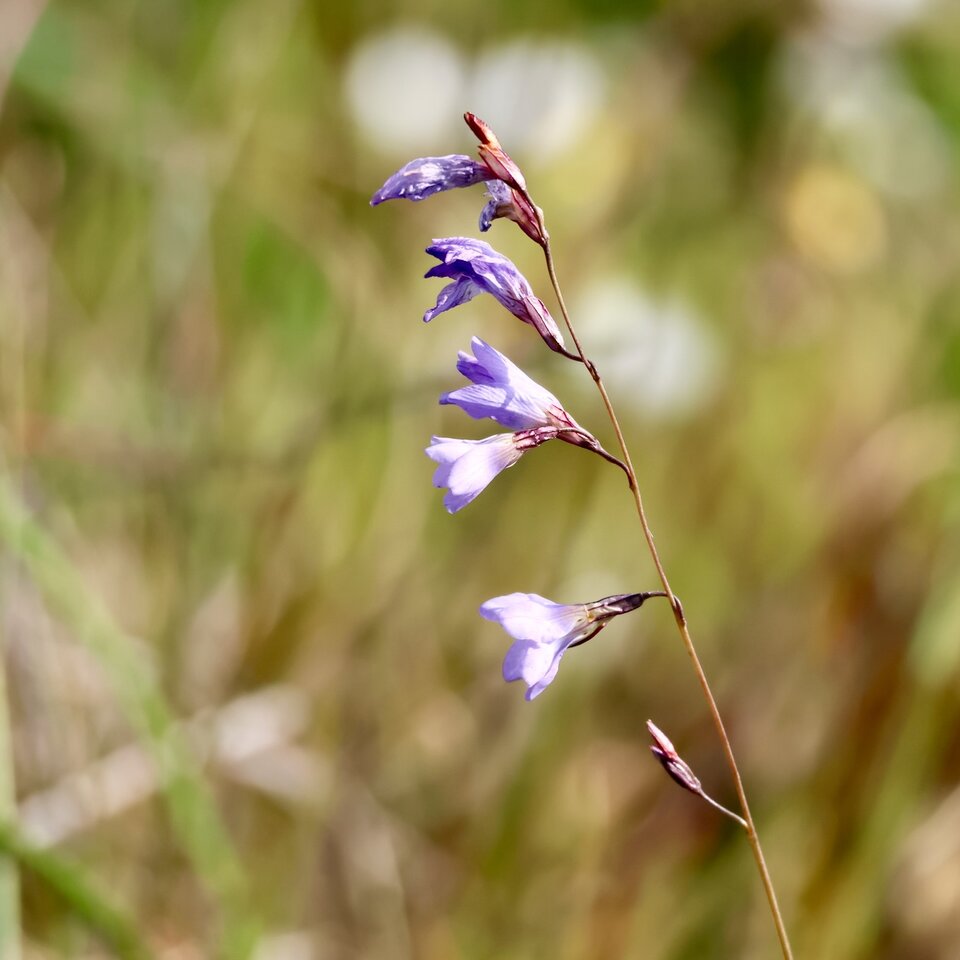
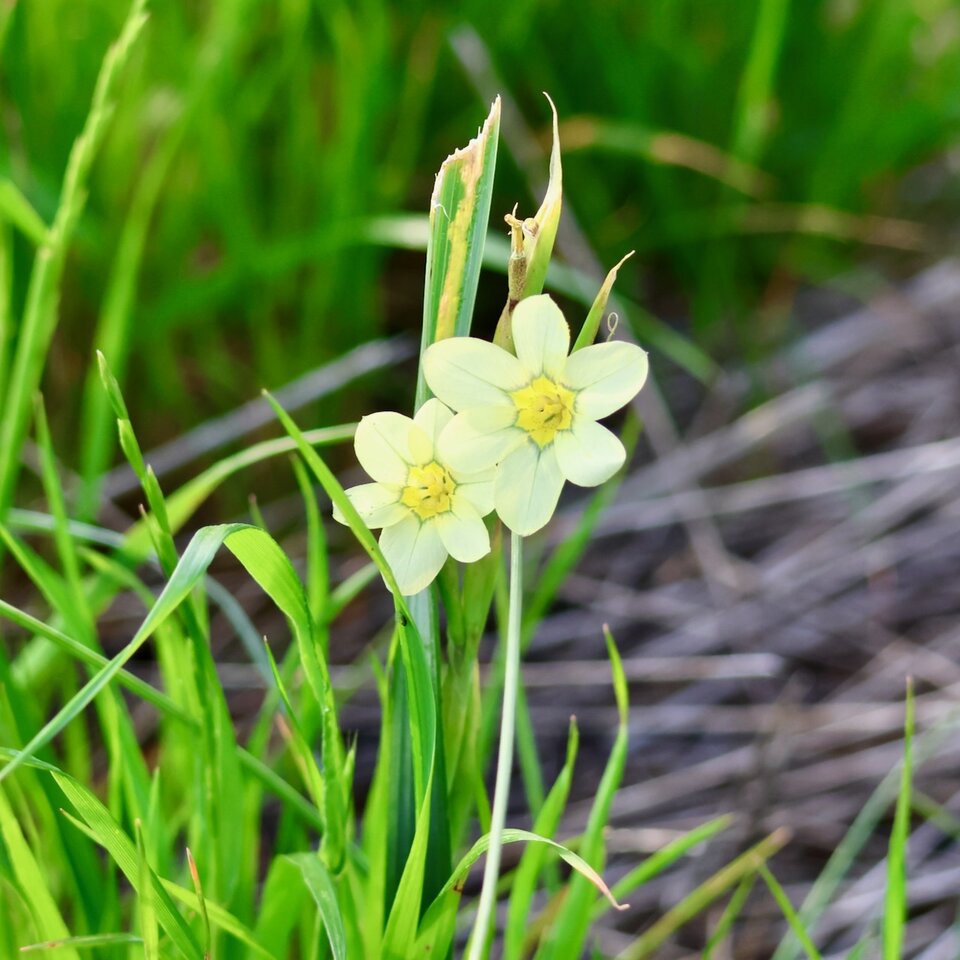
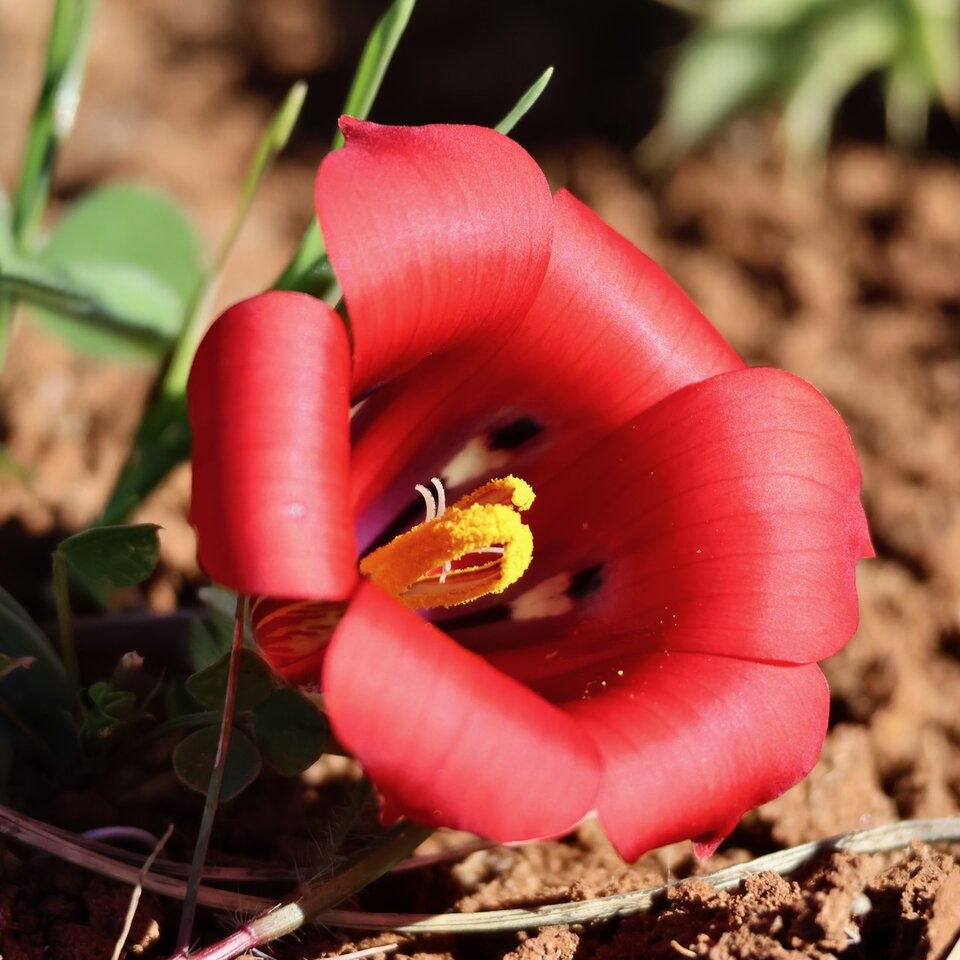
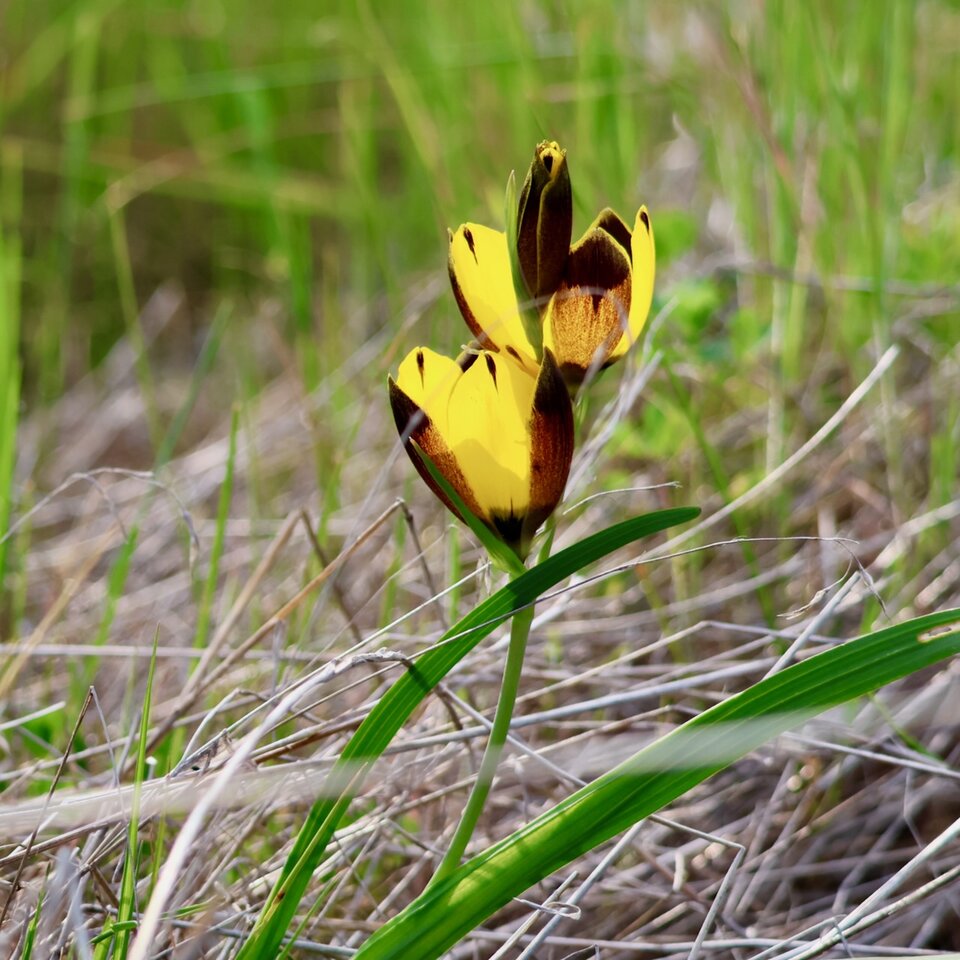
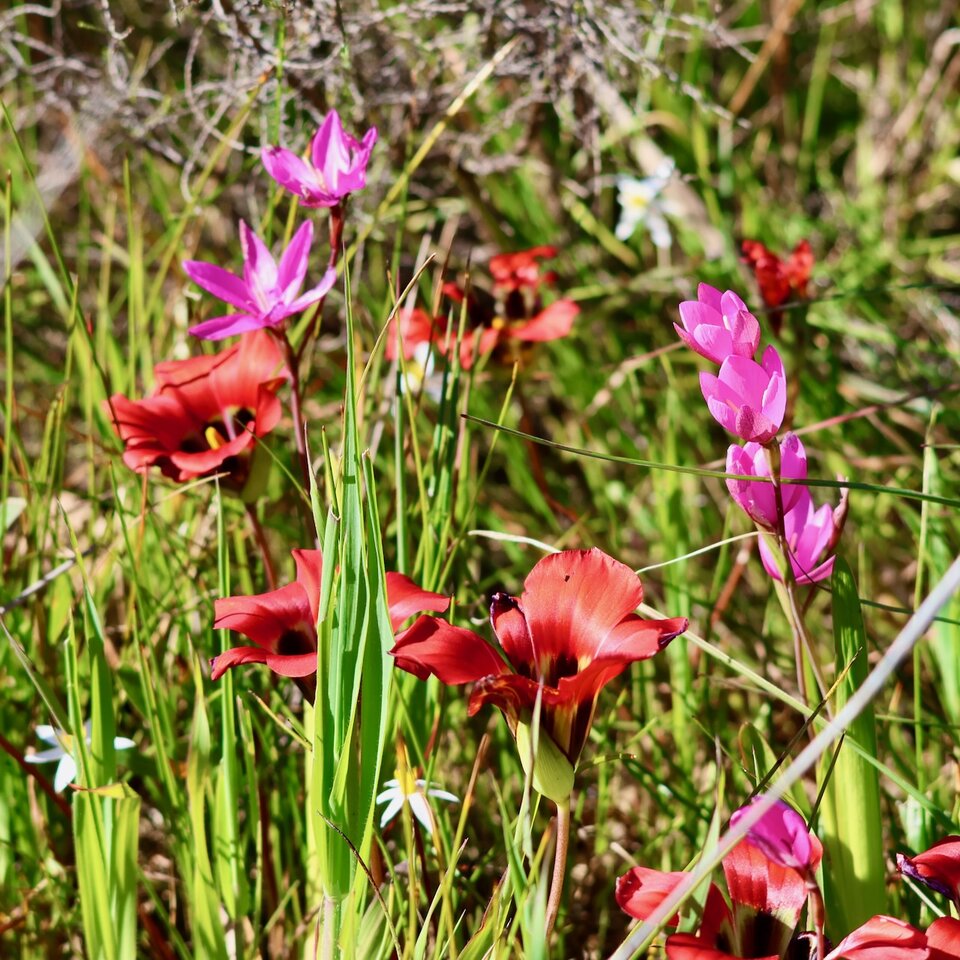
I had noticed a sign for the Spiderweb Walking Trail when we entered the gardens, so that is what we did, paying careful attention to what was happening at our feet. It took us more than an hour to walk the 450-metre loop. We took a couple of steps and spotted three flimsy stems of blue corn lilies. A few steps later, an elegant salmon-coloured floppy tulip, or wild iris, leaned into the wind. Ten more steps, and another one appeared, this time in the softest shade of yellow.
And so it went.
Walk a little. Stop. Bend closer. Peer through the grass. Find another small miracle hiding in plain sight.
By the end of the trail, we had recognised a few flowers from the specimen display, but only a few. Most remained mysterious, their names tucked safely beyond my botanical reach.
This was not the flower-viewing I had imagined. There wasn’t going to be any dramatic backlit tiptoeing through endless daisies. No great Insta-Hat triumph. No sweeping floral carpet laid out for my convenience. Instead, the Hantam Botanical Garden was quietly teaching me how to look properly.
Tiny Divas of the Veld
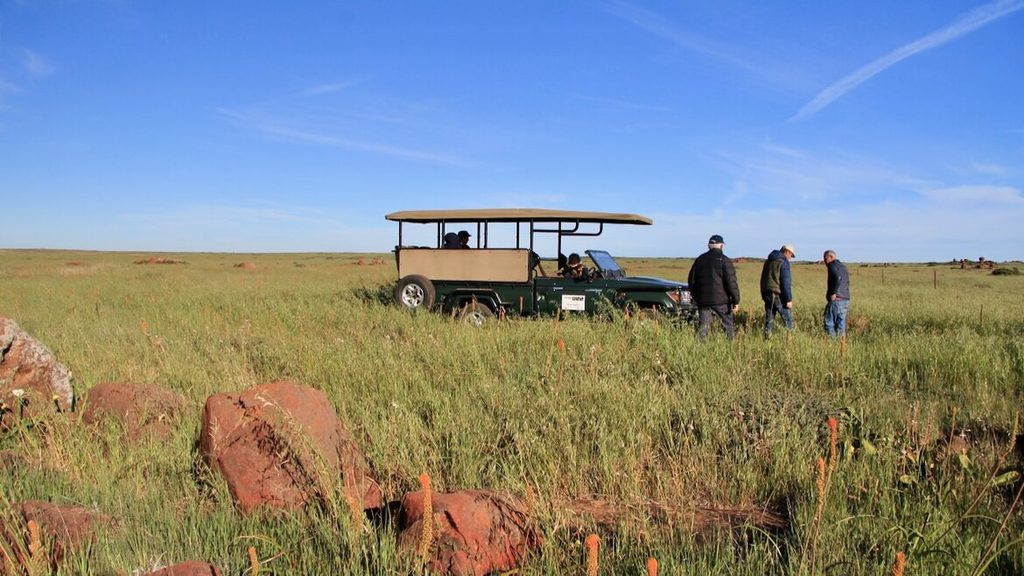
Johan suggests we join him on a late-afternoon flower safari to another SANBI property. He promises extraordinary flowers, and possibly even a field of late bloomers for Insta-Hat and me.
It is a bitterly cold afternoon. The wind slices straight through us as we set off in the SANBI Land Rover. I am wrapped in a blanket SANBI thoughtfully provided, with Insta-Hat tucked carefully underneath so she doesn’t launch herself into the Northern Cape.
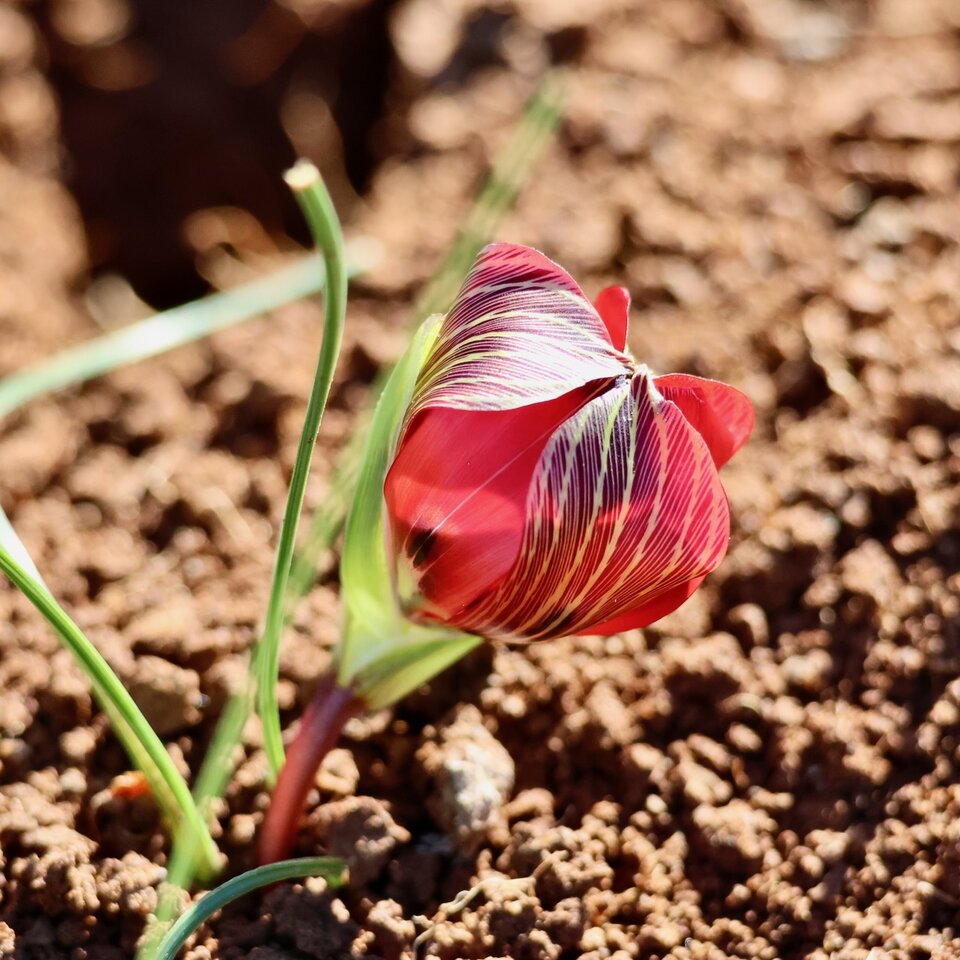
Johan stops often, leading us into the veld to meet flowers fussy enough to give Goldilocks a run for her money. The soil, light and temperature must all be just right. Some open only later in the day; other tiny divas refuse to perform unless conditions are perfect.
Beneath the dry, unpromising veld, bulbs wait underground, checking the soil, weather and light before deciding whether to appear. Even then, they may keep their petals tightly furled.
By the time we reach the promised field of late bloomers, I have almost lost interest in the spectacle. Still, I feel obliged to take at least one selfie with Insta-Hat. After all, I have schlepped this hat halfway across the country. At the very least, one of us should get something out of this.
But Insta-Hat is gone.
I search the vehicle in case she is sulking under the seat. Nothing. I check the folds of the blanket, peer between the seats. Nothing. Somewhere between one tiny botanical marvel and the next, she must have made her break for freedom, drifting on the winds of the Northern Cape.
We leave the flower safari with a new and slightly humbling kind of knowledge. We are no longer looking for a carpet, but for clues: a certain kind of soil in the right patch of veld with the right light and temperature.
If we’re lucky, some of these tiny and very particular flowers might be waiting there if we are patient enough to notice them.
The Lesson Was at Ankle Height
I came to Nieuwoudtville wanting a carpet. I wanted abundance, spectacle, and proof that I had timed it all perfectly. Instead, I got a lesson in humility from a field of flowers that had already done its best and gone slightly limp with the effort.
But once I stopped sulking, got out of the car, and began walking slowly through the grass, the smaller miracles appeared. Not the grand gesture I had come for, perhaps, but something quieter, stranger, and far more generous.
The lesson, as it turned out, was never waiting on the horizon. It was at ankle height.
Nieuwoudtville Good to Know
Planning your own flower-seeking adventure? Here are a few things we learnt along the way.
When to Visit Nieuwoudtville?
Typically, the flower season starts in August and runs through mid-September, but as we discovered, Mother Nature doesn’t always perform on cue.
Where to Stay in Nieuwoudtville?
Browse Nieuwoudtville accommodation on Karoo South Africa‘s website. You’ll also find places to eat and fascinating insights into the town’s history here.
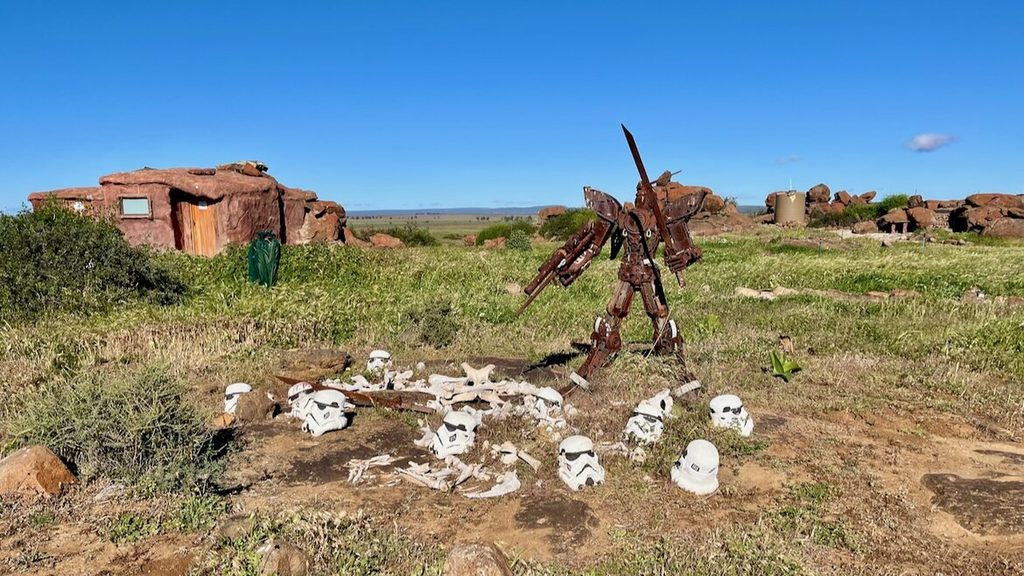
Where We Stayed: Starwors Village
As Star Wars fans, we couldn’t resist Starwors Village, a three-site campground just outside town. We set up camp at Yoda, complete with its own Tatooine-inspired bathroom. Their website calls it ‘glamping,’ although I feel that description is a bit of a stretch. During our two-week stay, the braai area was cleaned once, the dustbin emptied twice (once by us), and the bathroom not at all! Not quite up to my exacting glamping standards.
Housekeeping aside, we enjoyed the quirky atmosphere and the fun of camping in a galaxy just outside Nieuwoudtville.
Where Can You Find Flower Information?
At the Nieuwoudtville NG Church Hall. Make this your first stop before heading out in search of flowers. During the season, a tourism information office operates here, where you can buy a map and get tips from staff on the best flower-viewing locations.
The information centre is only open from early August to mid-September. It is closed on Sundays and is usually open Monday to Saturday from 9 am to 4 pm, but hours can vary.
There’s also a market selling locally made treats and crafts, from biscuits to exquisite leather goods. And be sure to try their pancakes — they’re the best I’ve ever had.
Where Can You Find Flowers Near Nieuwoudtville?
Willemsrivier and the Trek Pad
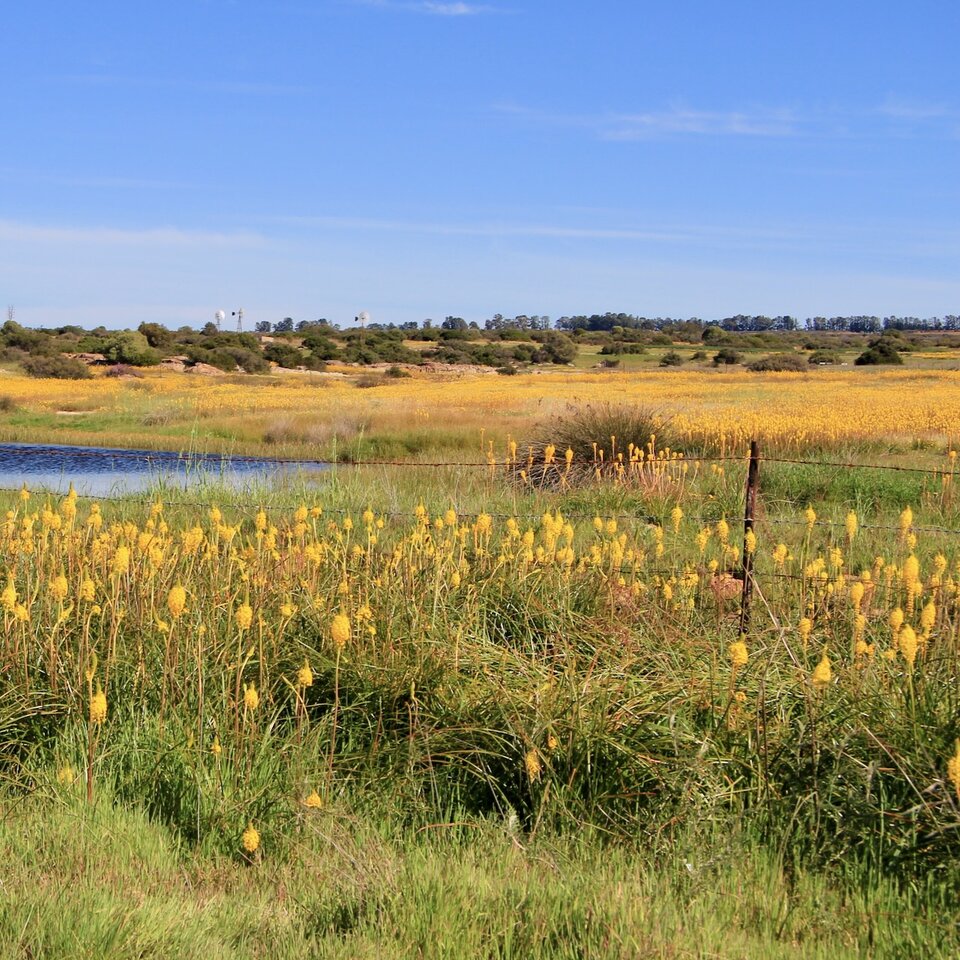
Willemsrivier, about 4 km from Nieuwoudtville off the Loeriesfontein road, is a good place to begin your flower search. Here we encountered vibrant fields of yellow bulbinellas, or katsterts, and tourist buses stopping for picnics in the flowers. Timing is everything, so avoid Willemsrivier over lunchtime.
Next to the Willemsrivier farm lies a one-way 4×4 track called the Trek Pad, open only during flower season. Here we drove-walked, inching forward by car before repeatedly hopping out to investigate another tiny flower.
Boereplaas and Matjiesfontein
On the other side of Nieuwoudtville you’ll find Boereplaas and Matjiesfontein. Both are private farms that open their gates to the public for a small fee during the season. Because the soil differs from that at Willemsrivier, you’ll find a whole array of different Goldilocks flowers and their not-so-fussy friends.
What Else is Worth Seeing Near Nieuwoudtville?
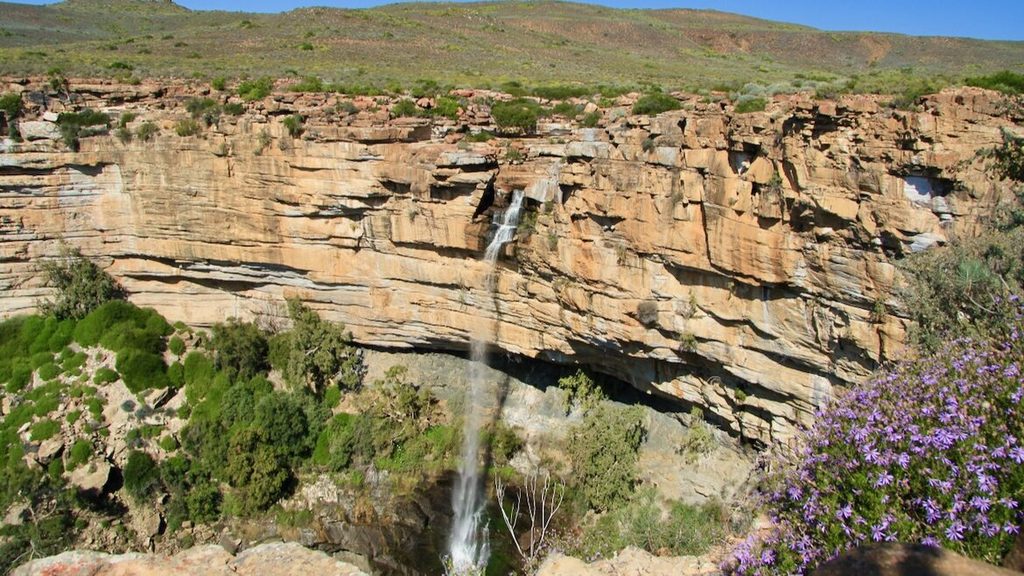
A couple of kilometres past the Willemsrivier turnoff on the Loeriesfontein Road, you’ll find signposts and a parking area for the local Nieuwoudtville Waterfall. It’s well worth a short stroll.
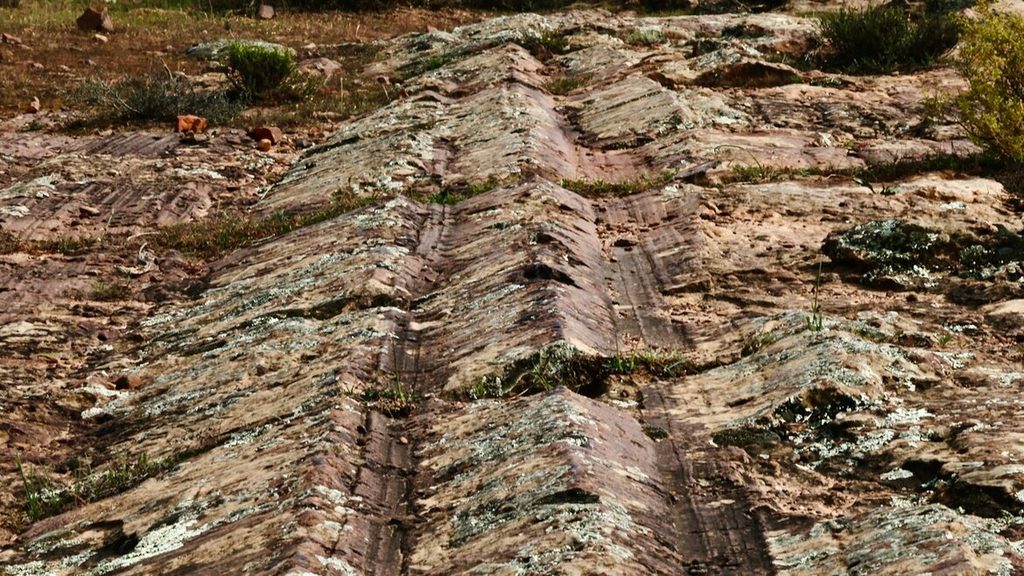
And as you head towards Boereplaas and Matjiesfontein, take a moment to visit the Oorlogkloof glacial pavement. I was amazed by the glacial grooves in the rocks. According to an information board at the site, these glacial grooves date back around 300 million years. Plus, you might find tiny yet beautiful flowers growing in wild profusion along the edges of the pavement.
DISCLOSURE: I have no commercial relationship with any of the places mentioned here. I have not received any payment, discounts or other benefits in exchange for this post. This blog shares my personal experiences and insights from time in nature. All photographs, experiences, and opinions are my own.